
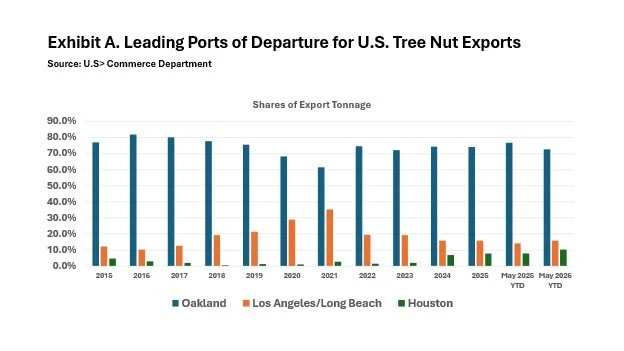
Ten years ago, the Port of Oakland handled 82.0% of the nation’s waterborne almond export traffic. Since then, the Northern California port’s share of the trade gradually declined to a low of 61.5% in 2021 before recovering to a 74.2% share last year. The chief beneficiaries of the diminishing volume of trade through Oakland have been the Southern California Ports of Los Angeles and Long Beach. Oakland’s in-state rivals claimed a 15.9% share of the trade last year, up from a 12.7% share in 2016. As they have been warning for years, but especially since the period of port congestion brought on a surge in imports during the first of years of the COVID-19 pandemic, tree nut exporters began diverting their shipments to ports outside of California. At Port Houston, for example, tree nut exports increased tenfold from 3,292 metric tons in pre-pandemic 2019 to 32,312 metric tons last year. That represented a 7.8% share of America’s tree nut exports. Substantial volumes of tree nut exports were also diverted to the Port of Norfolk, where the volume of tree nut exports rose from 35 metric tons in 2021 to 5,343 metric tons the following year before cresting at 13,588 metric tons in 2023 before finally settling at 3,772 metric tons in 2025. The Port of Savannah had a similar experience. Between 2022 and 2023, tree nut shipments from the Georgia port jumped from 492 metric tons to 7,295 metric tons before slipping back to 3,173 metric tons last year. Taken together, the two Mid-Atlantic Coast ports currently shoulder 1.7% of the nation’s tree nut exports. Still, the export volumes seen in 2022 and 2023 demonstrate that they can be an effective relief value for growers seeking to ship their products abroad.
Oakland’s Withering Share of Tree Nut Exports
Previous
Previous
Air-Conditioner Imports
Next
Next