
A Not So Happy Hour for America’s Wine Trade
By all accounts, wine consumption over the past two or three years has fallen off the bar stool. U.S. consumers as well as imbibers abroad have been either listening to their doctors’ health warnings or simply opting for other beverages. The latest annual report from the International Organisation of Vine and Wine states that wine consumption in 2024 hit its lowest level since 1961.
One outcome can be measured in the tens of thousands of acres (or hectares) of vineyards that have been taken out of production. Last year’s grape harvest in California was the smallest since 1994, the year Jeff Bezos founded an online bookstore. According to the U.S. Department of Agriculture, the state’s 2025 crop was 2.76 million tons, of which 2.62 million tons were wine grapes. That’s not surprising given that an estimated 40,000 acres of vines were removed last year. Wine grape growers in California, Washington, and Oregon are continuing to rip out even more vines, often replacing them with tree nuts that will eventually yield almonds, walnuts, hazelnuts, and pistachios. With beef prices at record highs, other growers are using their idled land for grazing livestock. Meanwhile, groceries and supermarkets are paring down on the shelf space devoted to wines.
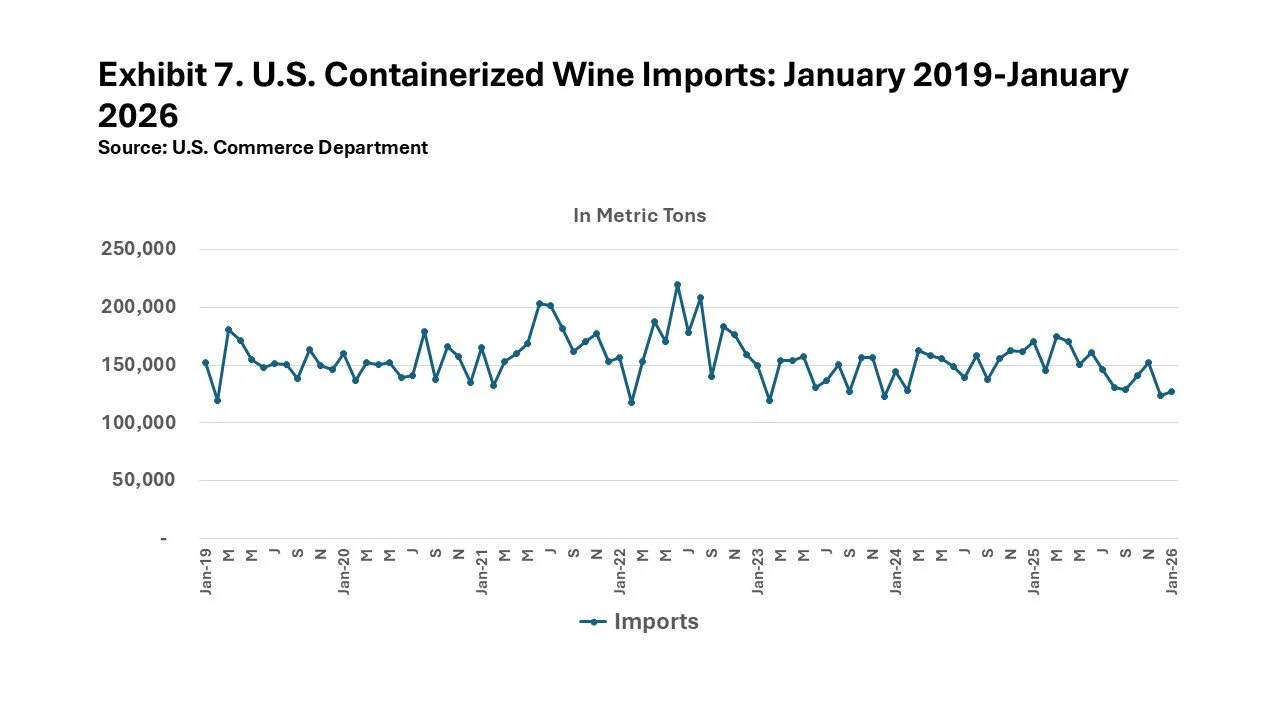
How has the downturn in wine consumption affected the transportation of wine through U.S. seaports? As Exhibit 7 indicates, the ebbing of wine production and consumption does not seem to have appreciably affected America’s oceanborne import trade in wine. Rather, wine imports (as measured in metric tons), surged in tandem with the most anxiety-ridden phase of the COVID pandemic but have since been resuming earlier patterns. Wine imports in 2025 were down just 1.7% from pre-pandemic 2019.
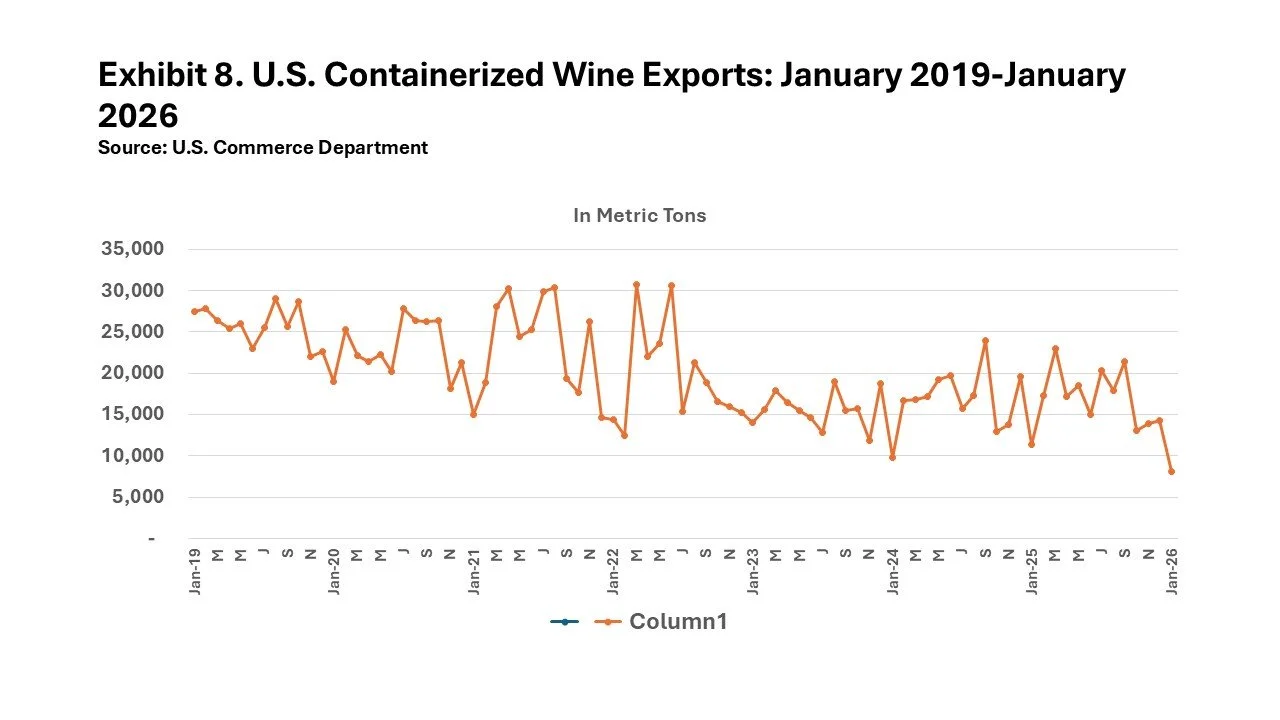
It’s been a different story for U.S. wine exports, however. As Exhibit 8 shows, the volume of American wine shipped to overseas markets last year y 34.4% from 2019.
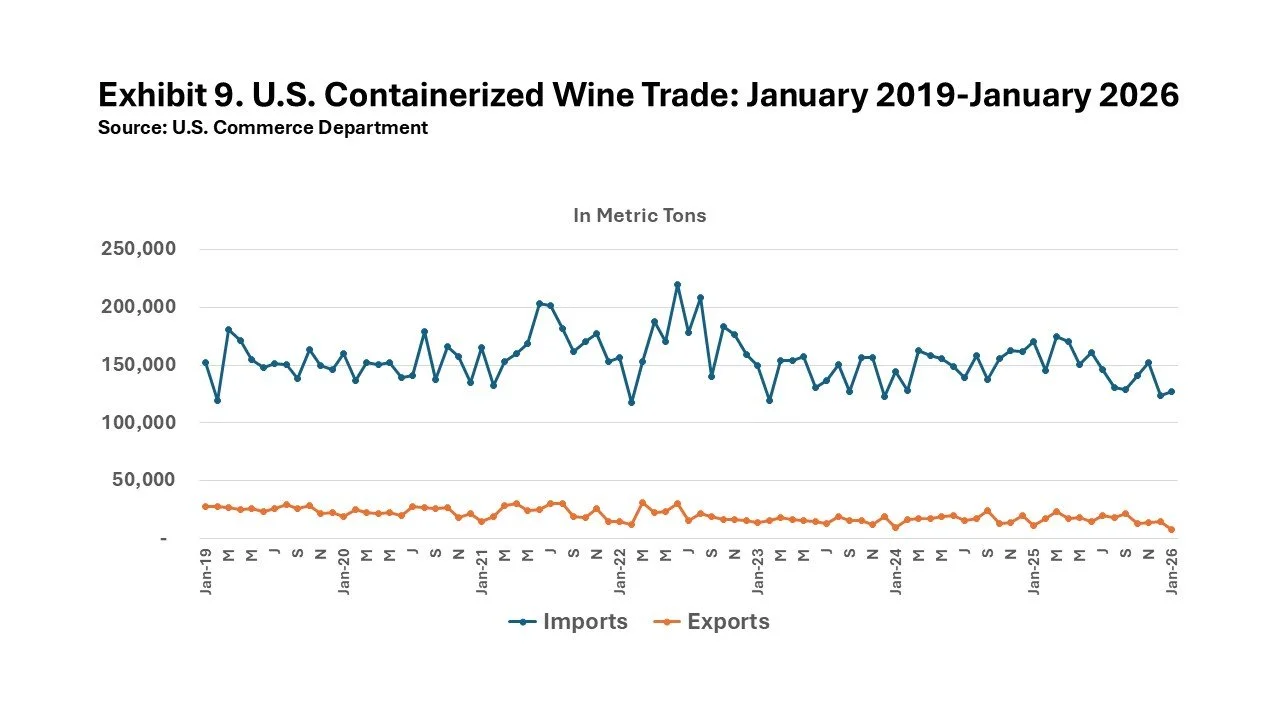
For readers wondering whether the U.S. has a trade surplus or deficit in its international wine trade, Exhibit 9 should settle the issue.
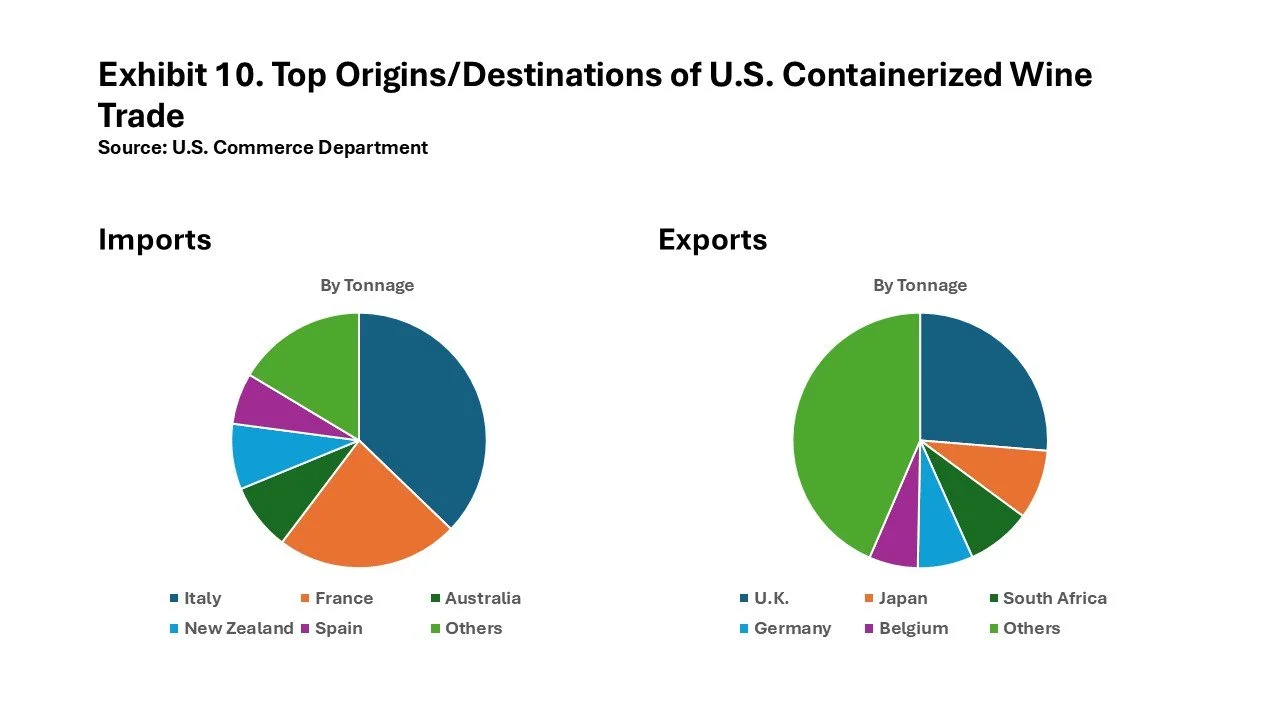
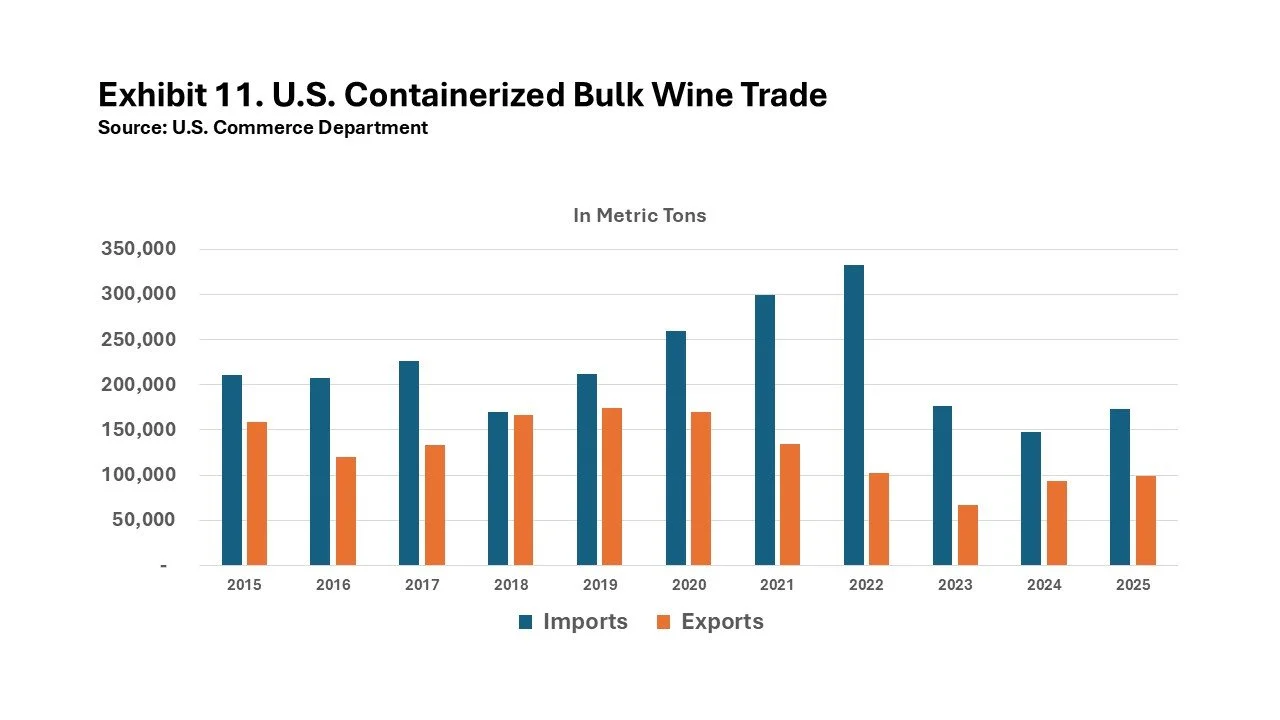
Of course, not all wine travels in familiar 750 milliliter (ml) glass bottles. Nearly half (48.8%) of U.S. wine exports last year were shipped in bulk, commonly in bladders capable of holding as much as 24,000 liters of wine. That is enough to fill 32,000 standard 750ml75ml bottles. Indeed, last year saw 86.2% of U.S. wine exported to our largest overseas customer, the United Kingdom, shipped in bulk. Upon arrival at a British port, the bladders are trucked (lorried?) to bottling plants such as a 1.6 million bottles per day facility at Avonmouth, a municipality located at – you guessed it – the mouth of the Avon River. Once bottled, the wine often carries the house label of major supermarket chains or is passed off as a cheap “California Wine” in groceries throughout Europe.
By contrast, just 21.2% of the wine shipped to Japan was in bulk.
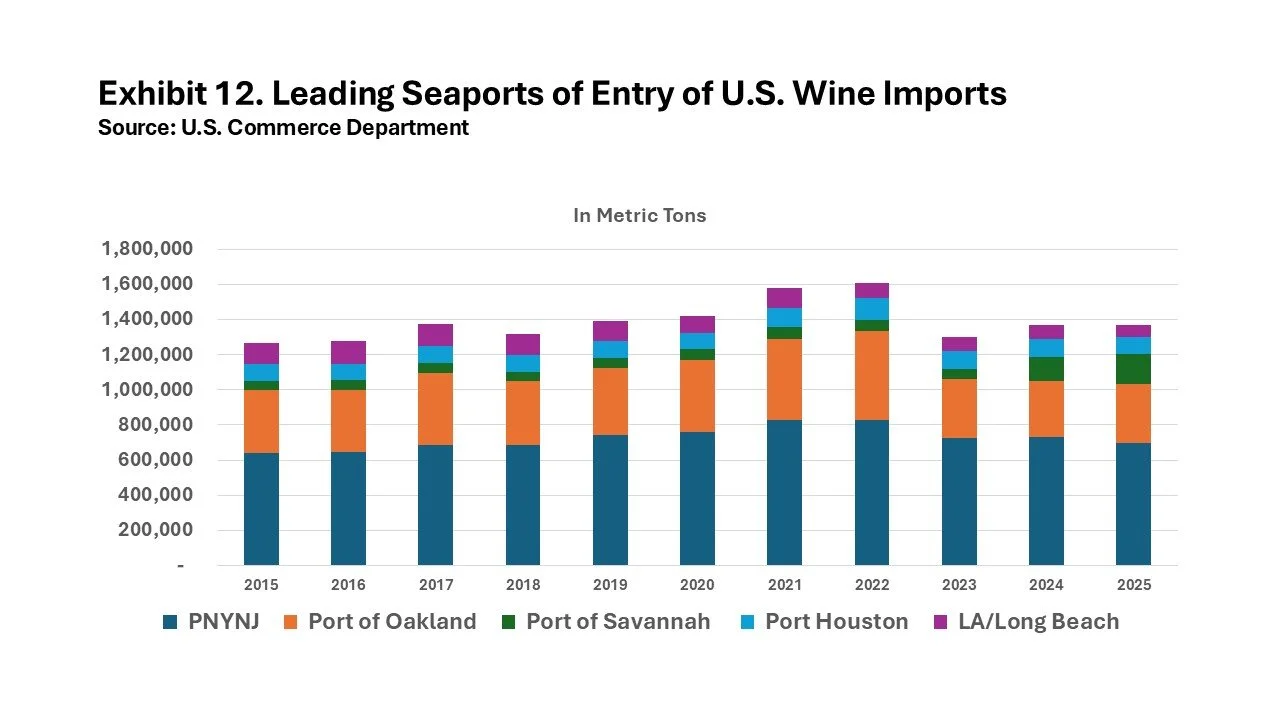
The Port of New York/New Jersey leads all other U.S. ports in wine imports. Its share last year amounted to 39.1%. Following behind were the Ports of Oakland (18.8%), Savannah (9.8%), Houston (5.4%), and Los Angeles/Long Beach (4.1%). The Northwest Seaport Alliance Ports of Tacoma and Seattle handled just 1.5% of U.S. wine imports by sea last year.
Not surprisingly, the Port of Oakland virtually monopolizes the U.S. wine export trade. It’s a classic story of location, location, location. The Northern California port is only 45 miles from the major wineries of Napa and Sonoma Counties, 110 miles from Monterey and the wineries of California’s Central Coast, and 80 miles from the Modesto headquarters of Gallo, the world’s largest winemaker.
Last year, 52.3% of the 185,427 metric tons of wine shipped from the Port of Oakland traveled in bulk. That share was down from an all-time high of 64.5% in 2020, but up from a 41.2% share ten years earlier in 2015.
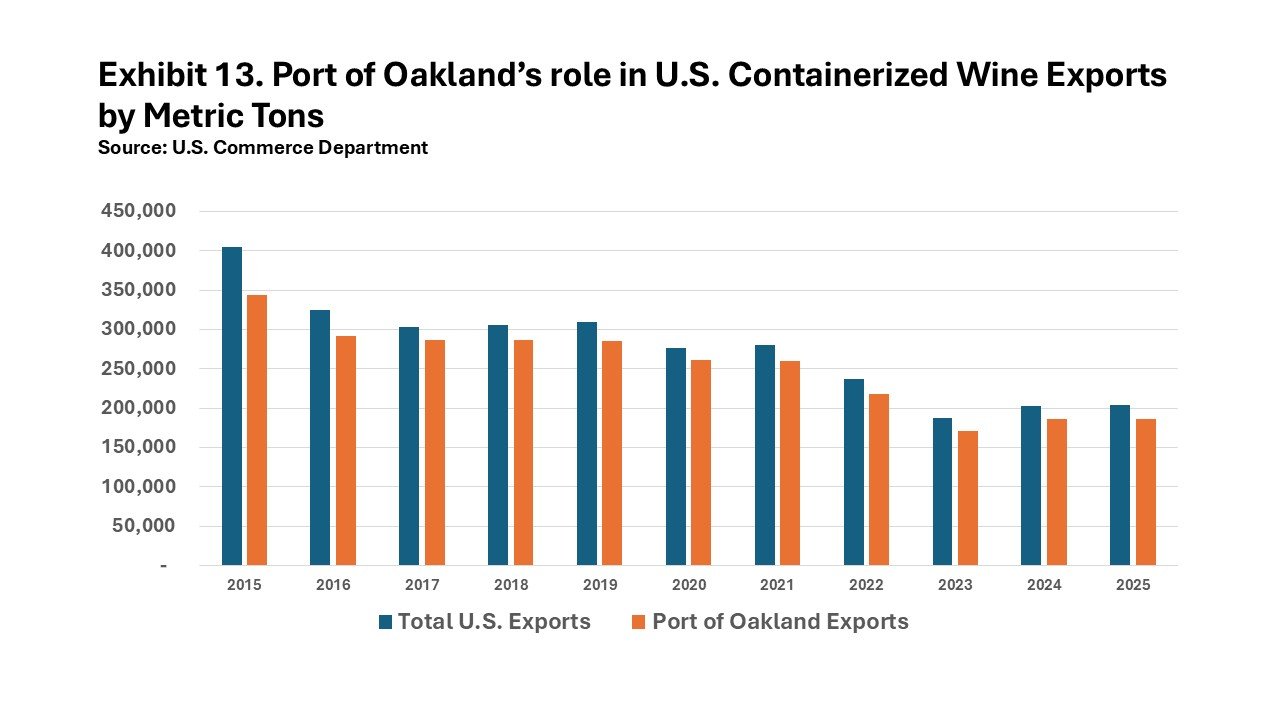
Interestingly, the Port of Oakland has witnessed a shift in bulk wine’s share of the port’s overall wine export trade since early in this century. In 2003, bulk shipments accounted for just 3.2% of all wine exported from the San Francisco Bay port. As large, rubberized bladders improved in quality and reliability, the bulk wine share quickly soared to 39.6% ten years later in 2013 and eventually peaked at 64.5% in 2020, the first year of the COVID pandemic. It has since leveled off to around half of all the port’s wine exports.
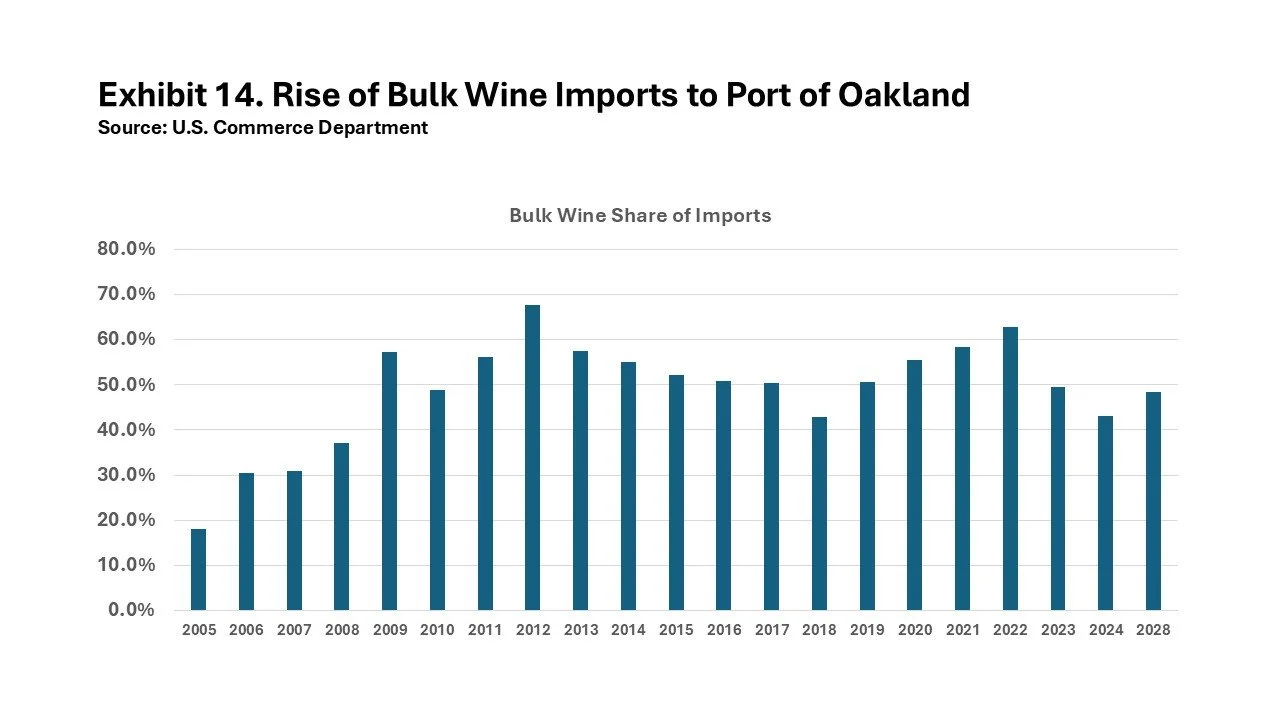
What may come as news to more than a few readers of this newsletter is that bulk wine shipments from countries like Australia, New Zealand, Chile, France, and Italy represent a majority share of all wine imports entering the Port of Oakland. In this case, the wine is not so much bottled for domestic consumption but is rather blended with California wines to achieve a desired balance of taste, color, and economics.